Nafeesa Parveen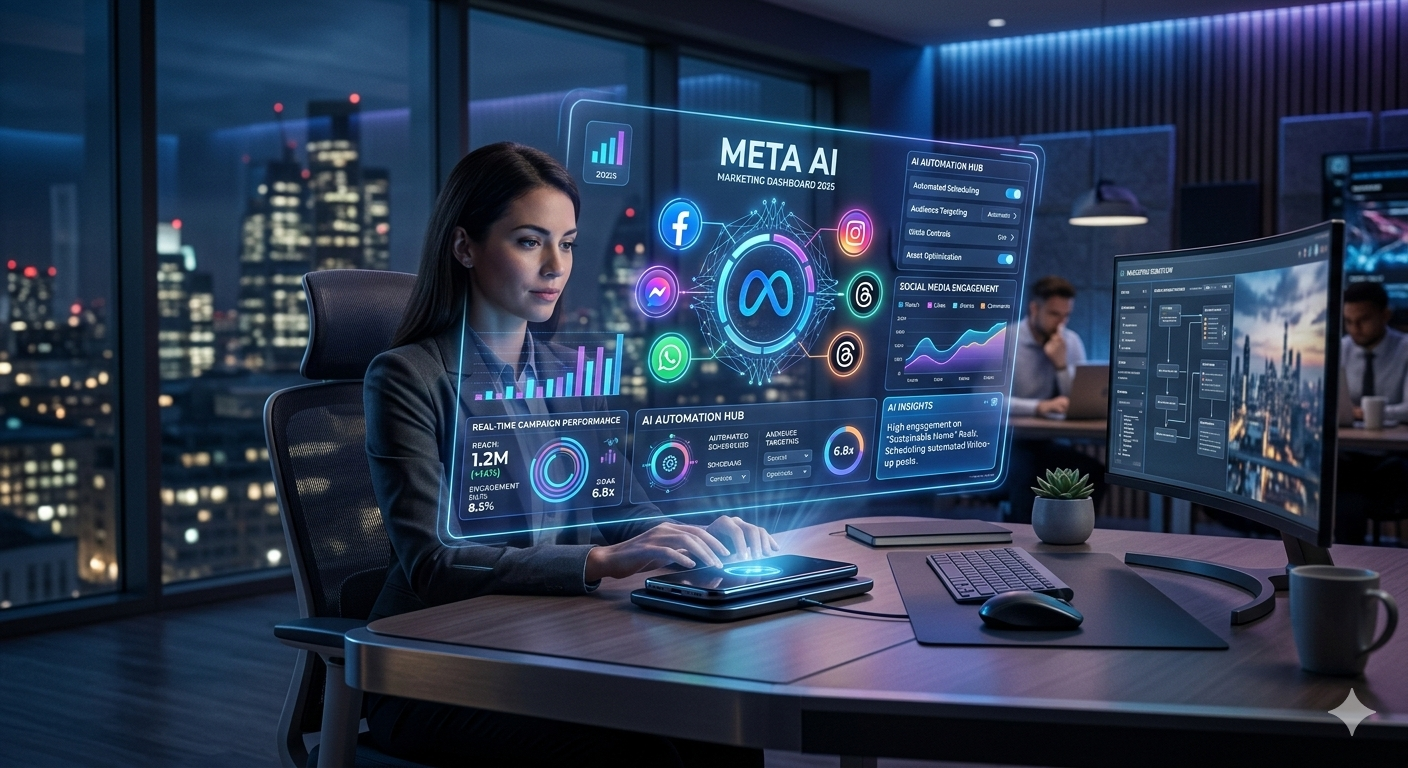
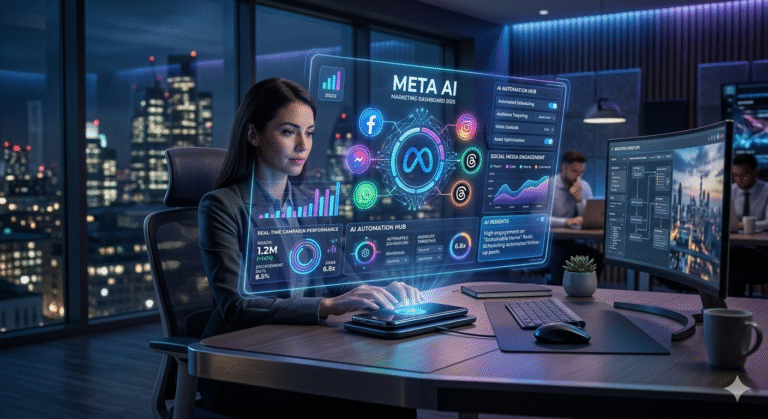
Meta AI in 2026 powering social media automation, AI-driven content creation, customer support, and digital marketing analytics
Meta AI in 2026: The Future of Smart Social Media Automation
Artificial Intelligence is no longer a futuristic concept. It is now deeply embedded in everyday digital experiences. From automated replies to AI-generated images and business analytics, AI is transforming how we interact online.
Among the most powerful innovations shaping this transformation is Meta AI in 2026, a system that is redefining smart social media automation for individuals, creators, and businesses.
This guide will fully explain features, use cases, business impact, monetization opportunities, automation strategies, privacy concerns, and the future roadmap.
1. The Rise of AI in Social Media
Social media has evolved from simple networking platforms to advanced digital ecosystems.
In 2026, platforms are powered by:
- Predictive algorithms
- AI-generated recommendations
- Automated moderation
- Personalized content feeds
- Smart advertising systems
This is where Meta AI in 2026 becomes a central player.
Unlike traditional chatbots, this AI is deeply integrated into messaging, advertising, content creation, and customer engagement tools.
2. What is Meta AI?
Meta AI is the artificial intelligence system developed by Meta Platforms, the parent company of:
It is designed to:
- Automate conversations
- Generate content
- Assist with marketing
- Provide intelligent recommendations
- Enhance user interaction
The difference in Meta AI in 2026 is its seamless ecosystem integration.
3. Core Features of Meta AI in 2026
1. Conversational Intelligence
Understands context and intent, not just keywords.
2. AI Content Creation
Generates:
- Captions
- Ad copies
- Blog ideas
- Reel scripts
- Product descriptions
3. Automated Customer Support
Provides:
- Instant responses
- FAQ handling
- Order tracking updates
4. AI Image Generation
Users can generate visuals inside chats.
5. Smart Ad Optimization
Suggests:
- Audience targeting
- Budget optimization
- Creative variations
These features make Meta AI in 2026 more than just a chatbot — it is a marketing assistant.
4. How Businesses Use Meta AI
Businesses are using AI automation to reduce costs and increase efficiency.
E-commerce
- Automated product suggestions
- Personalized recommendations
- Cart abandonment follow-ups
Influencers & Creators
- Caption generation
- Trending topic suggestions
- Engagement prediction
Digital Marketing Agencies
- Ad copy creation
- Campaign planning
- Audience analysis
The automation capabilities of Meta AI in 2026 significantly reduce manual workload.
5. Meta AI vs Other AI Tools
It competes with:
- ChatGPT
- Google Gemini
- Claude
What makes it different?
- Native integration with social media
- Real-time messaging access
- Commerce-focused automation
- Built-in ad intelligence
6. Social Media Automation Explained
Social media automation includes:
- Scheduled posts
- Automated replies
- AI chat support
- Smart comment moderation
- Lead generation funnels
In 2026, automation is not optional — it is necessary.
Meta AI in 2026 enables brands to operate 24/7 without hiring large teams.
7. Content Creation with Meta AI
Content is still king.
AI now helps create:
- Carousel scripts
- Story ideas
- Hook lines
- Email marketing drafts
- Blog outlines
Instead of replacing creativity, it enhances productivity.
Creators using Meta AI in 2026 can scale content production faster.
8. Advertising Automation
Advertising is becoming AI-driven.
Meta AI analyzes:
- User behavior
- Engagement patterns
- Purchase signals
- Demographic data
Then it optimizes campaigns automatically.
This reduces wasted ad spend.
How to Do Keyword Research in 2026: Ultimate SEO Guide
Search Engine Optimization has changed dramatically over the past few years. With AI-driven search engines, voice search growth, semantic indexing, and evolving user behavior, keyword research in 2026 is no longer about simply finding high-volume words. It is about understanding intent, context, behavior, and search ecosystems.
9. Data & Personalization
Personalization is the biggest advantage.
AI can:
- Suggest products
- Recommend content
- Predict interests
- Personalize offers
The personalization engine inside Meta AI in 2026 improves user satisfaction and engagement.
10. Privacy & Security Concerns
With AI integration, privacy questions arise.
Meta claims:
- Data encryption
- User control settings
- AI moderation systems
Users should:
- Avoid sharing sensitive details
- Review privacy policies
- Understand AI usage terms
Transparency will shape the future success of AI tools.
11. Monetization Opportunities
Businesses can monetize using:
- AI-powered ad campaigns
- Automated lead generation
- E-commerce funnels
- Influencer collaborations
Creators can monetize faster by leveraging automation tools built into Meta AI in 2026.
12. AI & The Metaverse Connection
Meta is investing in immersive technologies.
Future developments may include:
- AR-powered AI assistants
- Smart glasses integration
- Virtual shopping experiences
- Voice-controlled automation
This makes AI a foundation for the next digital era.
13. Advanced Automation Strategies
Experts use:
- Funnel automation
- Behavioral targeting
- AI content repurposing
- Predictive analytics
- Cross-platform integration
Scaling becomes easier with AI-driven systems.
14. Challenges of Meta AI
No technology is perfect.
Challenges include:
- Over-reliance on automation
- Reduced human touch
- Ethical concerns
- Algorithm bias
- Regulatory changes
Businesses must balance automation and authenticity.
15. The Future Outlook
AI is moving toward:
- Hyper-personalization
- Real-time predictive engagement
- Voice-first interaction
- AI-generated virtual influencers
- Advanced commerce integration
Meta AI in 2026 represents the beginning of a fully automated digital ecosystem.
Final Thoughts
AI is no longer a luxury tool. It is the backbone of modern digital marketing.
From automated customer service to ad optimization and content creation, Meta AI in 2026 is transforming how brands communicate and grow online.
This guide covered:
- Features
- Business use cases
- Automation strategies
- Advertising impact
- Monetization opportunities
- Privacy concerns
- Future predictions
About The Author